Four Seasons in Rome is a heart-filled and keenly-felt account of a year in the Eternal City. As he and his wife navigated parenthood and sleeplessness, they also fell in love with Italy and her people.
Anthony Doerr was kind enough to answer questions about his time in Rome and Four Seasons in Rome.
AKN: Your book, Four Seasons in Rome, is about two simultaneous culture shocks: fatherhood (of twins, no less) and moving to Italy. How did living in Italy, a country that loves children, help you adapt to being a new father?
AD: Though it's a generalization, I'd say it's more socially acceptable for a man to be affectionate in Rome, and I liked that. Because we had twins and no family to help us with the kids, I had to be an involved father, and seeing older men, men in suits, stop their day and bend over our stroller and croon at our babies reminded me that it's okay to cherish your kids, to value the act of parenting. Italy also taught me to slow down; by the time we'd gotten dressed, did our grocery shopping and wheeled the stroller home and crammed it into the elevator, three hours had passed and it was already time for the babies to nap. Here at home it's so much easier to use a car to go buy all our groceries. While I was frustrated by the slowness of things sometimes, at other times Rome helped remind me to cherish the gifts we had been given.
AKN: In Rome, you were part of the community at the American Academy. Was it easy to immerse yourself in Italian life as part of an ex-pat community? Or did you find comfort in having a few Americans around as you settled into your new life?
AD: There was a definite comfort in living within a small group of Americans, particularly for things like plumbing problems, figuring out where to buy a crib bumper, or what ingredients were in Italian baby formula. When our kids got sick, we had folks to recommend a pediatrician to us in English. I had folks who could introduce me to Italian writers, who knew where the best bookshops were, etc. So, yes, it was much easier than if we'd moved to Italy on our own, with no support structure around us.
AKN: Your prior books (The Shell Collector and About Grace) are both works of fiction. When you went to Rome, did you intend to write about your experiences? How did Four Seasons in Rome come about?
AD: Though it's a generalization, I'd say it's more socially acceptable for a man to be affectionate in Rome, and I liked that. Because we had twins and no family to help us with the kids, I had to be an involved father, and seeing older men, men in suits, stop their day and bend over our stroller and croon at our babies reminded me that it's okay to cherish your kids, to value the act of parenting. Italy also taught me to slow down; by the time we'd gotten dressed, did our grocery shopping and wheeled the stroller home and crammed it into the elevator, three hours had passed and it was already time for the babies to nap. Here at home it's so much easier to use a car to go buy all our groceries. While I was frustrated by the slowness of things sometimes, at other times Rome helped remind me to cherish the gifts we had been given.
AKN: In Rome, you were part of the community at the American Academy. Was it easy to immerse yourself in Italian life as part of an ex-pat community? Or did you find comfort in having a few Americans around as you settled into your new life?
AD: There was a definite comfort in living within a small group of Americans, particularly for things like plumbing problems, figuring out where to buy a crib bumper, or what ingredients were in Italian baby formula. When our kids got sick, we had folks to recommend a pediatrician to us in English. I had folks who could introduce me to Italian writers, who knew where the best bookshops were, etc. So, yes, it was much easier than if we'd moved to Italy on our own, with no support structure around us.
AKN: Your prior books (The Shell Collector and About Grace) are both works of fiction. When you went to Rome, did you intend to write about your experiences? How did Four Seasons in Rome come about?
AD: When I went to Rome, I intended to work on a novel. And I did work on it, but only in fits and starts. Within the first few weeks Rome itself became my subject, and the journals I might normally scribble in for twenty minutes before starting in on some fiction, began to consume three, four, or five hours of writing time every day. I began filling notebook after notebook. I think this happens to lots of foreign writers who go to Rome. Maybe it's harder to enter an imaginative, fictional place when the city outside your window is so astoundingly interesting.
Four Seasons came about after I got back to Idaho, and fell quickly into my old familiar routines, and began to feel as if our year in Rome had been only a dream. I was worried I would forget it; it was almost as if I had to go back through my journals, and try to assemble a book out of our year there, in order to make our experience feel real.
AKN: You happened to be in Rome when John Paul II died. As an outsider, describe Italy’s grief as you witnessed it. Were you able to maintain an emotional distance or were you swept into it as well?
AD: I think my tendency, had I not been there, would to be cynical about the whole event. Everything was filmed; everyone was filming; media vans took up practically an entire city block. The huge electric spotlight of the world was on Piazza san Pietro, and to see it on t.v. I think would have made everything feel a bit overexposed.
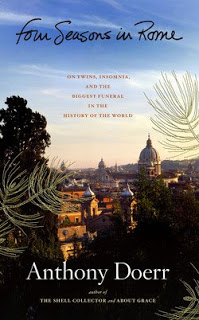 But to be there, at his death, for the funeral, and again for the selection of his successor, even as an outsider, crammed into those mobs of people (5 million at the funeral!) was to feel a part of something very big and very old. I remember, on the night he died, hearing three priests singing a song on the basilica steps, and thinking that there was something very real about that moment, despite the cameras, despite the spectacle. The catholic church is still a master of stagecraft and ceremony, and it was easy to be swept into the grandeur of it all.
AKN: How did learning functional Italian affect the writing you were doing in English?
Four Seasons came about after I got back to Idaho, and fell quickly into my old familiar routines, and began to feel as if our year in Rome had been only a dream. I was worried I would forget it; it was almost as if I had to go back through my journals, and try to assemble a book out of our year there, in order to make our experience feel real.
AKN: You happened to be in Rome when John Paul II died. As an outsider, describe Italy’s grief as you witnessed it. Were you able to maintain an emotional distance or were you swept into it as well?
AD: I think my tendency, had I not been there, would to be cynical about the whole event. Everything was filmed; everyone was filming; media vans took up practically an entire city block. The huge electric spotlight of the world was on Piazza san Pietro, and to see it on t.v. I think would have made everything feel a bit overexposed.
But to be there, at his death, for the funeral, and again for the selection of his successor, even as an outsider, crammed into those mobs of people (5 million at the funeral!) was to feel a part of something very big and very old. I remember, on the night he died, hearing three priests singing a song on the basilica steps, and thinking that there was something very real about that moment, despite the cameras, despite the spectacle. The catholic church is still a master of stagecraft and ceremony, and it was easy to be swept into the grandeur of it all.AKN: How did learning functional Italian affect the writing you were doing in English?
AD: That's a great question. I don't know if I'm conscious of whatever impact it might have had. I love learning about the roots of words, and I supposed I learned a bit more about that. But I never achieved fluency--I didn't know the idioms, I couldn't read, say, Calvino in the original Italian--things which probably would have affected my writing in English quite a bit more.
AKN: You are now back in Boise, Idaho (and congrats on being the state’s Writer-in-Residence). What do you miss most about Rome?
AD: We miss the food. And the walking. America is a country of sugar, and, except New York, American is basically a country of the automobile. I miss unpasteurized cheese and that dark green cloudy olive oil you can get in Umbria. And I miss having long walks built into every single day. I miss seeing the sidewalks jammed with people.
AKN: If you only had one day to spend in Rome, what would you do? More importantly: where would you eat?
AKN: You are now back in Boise, Idaho (and congrats on being the state’s Writer-in-Residence). What do you miss most about Rome?
AD: We miss the food. And the walking. America is a country of sugar, and, except New York, American is basically a country of the automobile. I miss unpasteurized cheese and that dark green cloudy olive oil you can get in Umbria. And I miss having long walks built into every single day. I miss seeing the sidewalks jammed with people.
AKN: If you only had one day to spend in Rome, what would you do? More importantly: where would you eat?
AD: We'd have a cappuccino at Sant'Eustachio (Piazza Sant'Eustachio 82) and then we'd sit for a long time in the Campo dei Fiori and watch people. Then I'd go to Sant’ Ivo alla Sapienza, a astounding white church by Borromini. Maybe there'd even be a choir singing in there. Then I'd walk around the Colosseum and back all the way up through Trastevere deep into Monteverde to a restaurant called il Cortile, on via Pisacane. The antipasto table is there is where antipasto goes when it goes to heaven: frittate, seafood, asparagus, these incredible mushrooms. I'd get some pasta, Shauna would order the pollo al diavolo, a smashed and salted chicken half, and we'd nurse our tired feet and eat antipasto forever.
[Note: Click this link for a map and more details on Anthony Doerr's One Day in Rome.]
AKN: Are you sleeping better these days? And how is your family?
AD: I am sleeping fine, thanks! The kids are almost five now, so they're pretty self-sufficient, and finally sleep through the night. We miss Rome, but we're happy and healthy and we live in a beautiful place, and that's all we can ask for.
[Note: Click this link for a map and more details on Anthony Doerr's One Day in Rome.]
AKN: Are you sleeping better these days? And how is your family?
AD: I am sleeping fine, thanks! The kids are almost five now, so they're pretty self-sufficient, and finally sleep through the night. We miss Rome, but we're happy and healthy and we live in a beautiful place, and that's all we can ask for.
AKN: Many thanks!
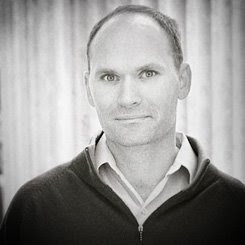
Anthony Doerr lives in Boise, Idaho with his wife and two sons. He is currently the Writer-in-Residence for the State of Idaho . You can read more about him on his website . Additionally, Mr. Doerr regularly writes a column about science books for the Boston Globe.