Michelangelo’s Birth & Childhood

Tools of a sculptor
Michelangelo as a Child
Michelangelo Buonarroti was born in an extraordinary time and in an extraordinary place, and he flourished...
“Michelangelo was born in 1475 to parents living in genteel poverty. The family lived in Caprese near Florence, where Michelangelo’s father, Lodovico di Leonardo Buonarroti Simoni, had a minor government appointment. His mother, Francesca Neri di Miniato del Sera, fell from a horse during her pregnancy; happily, the fall did not seem to affect the child she was carrying.
Lodovico had married Francesca a few years before, in 1472, when she was about seventeen and he was twenty-seven. The proud father wrote of his son’s birth:
I record that on this day the sixth of March 1475 a son was born to me: I gave him the name of Michelangelo, and he was born on Monday morning, before four or five o’clock, and he was born to me while I was podestà of Caprese, and he was born at Caprese: the godfathers were those named below. He was baptized on the eighth day of the same month in the church of San Giovanni at Caprese.
As was typical for a child from his social class, Michelangelo was sent to live with a wet nurse for his first few years. The nurse was the daughter and the wife of stonemasons, leading Michelangelo to jokingly declare, “If I have any intelligence at all, it has come . . . because I took the hammer and chisels with which I carve my figures from my wet-nurse’s milk.” Michelangelo had four siblings: one older brother, Leonardo, and three younger ones, Buonarroto, Giovansimone, and Gismondo. Their mother died in 1481, the year Gismondo was born. Michelangelo’s sensitive images of women with their children—from the Rome Pieta to the mothers on the ceiling of the Sistine Chapel—reflect the longing of a boy who was motherless from the age of six.
Michelangelo’s portrayals of women were also shaped by the rich beauty of his hometown; Florence in the fifteenth century was a city of prosperity, elegance, and artistry. From Ghiberti’s bronze doors on the baptistry of Santa Maria dell Fiore depicting detailed friezes of Biblical stories, which Michelangelo would call “the Gates of Paradise,” to Brunelleschi’s dome and della Robbia’s medallions on the Ospedale degli Innocenti, the city through which young Michelangelo wandered was filled with art on public display. After all, the Medici family had planned it that way...”

By Angela K. Nickerson
Reviews
"Nickerson's book seamlessly interweaves the genres of biography, art history, and travelogue into a convenient . . . portable package." —Art Blog by Bob
"Well-written, lively without being pat, informative without being burdensome, and at 163 pages, it's easily readable." —Grizzled Old Traveler
"Works well on many different levels . . . a great book." —Wandalust
"Chockablock with information about the artist and his creations . . . that anyone interested in Michelangelo would want to see." —New Jersey Star-Ledger
"An incredible read. Heading to Rome? Don't go without this book." —Wandering Educators
"The richness of your visit will only be compounded by this insightful book." —examiner.com
"There aren't many times I would be willing to carry two books around on a trip, but . . . this is a great addition to one's day pack." —gogalavanting.com
"The combination of both personal and professional, with photos and maps, results in an art history book that invaluable to the Roman visitor and a joy for the armchair traveler." —Bookstorepeople.com
- Series: IPS
- Paperback: 163 pages
- Publisher: Roaring Forties Press; 1st edition (March 1, 2008)
- Language: English
- ISBN-10: 0977742911
- ISBN-13: 978-0977742912
- Product Dimensions: 7.5 x 0.5 x 7.5 inches
- Shipping Weight: 15.2 ounces

Frieze from Ghiberti’s baptistry doors

Illuminated manuscript created in Florence
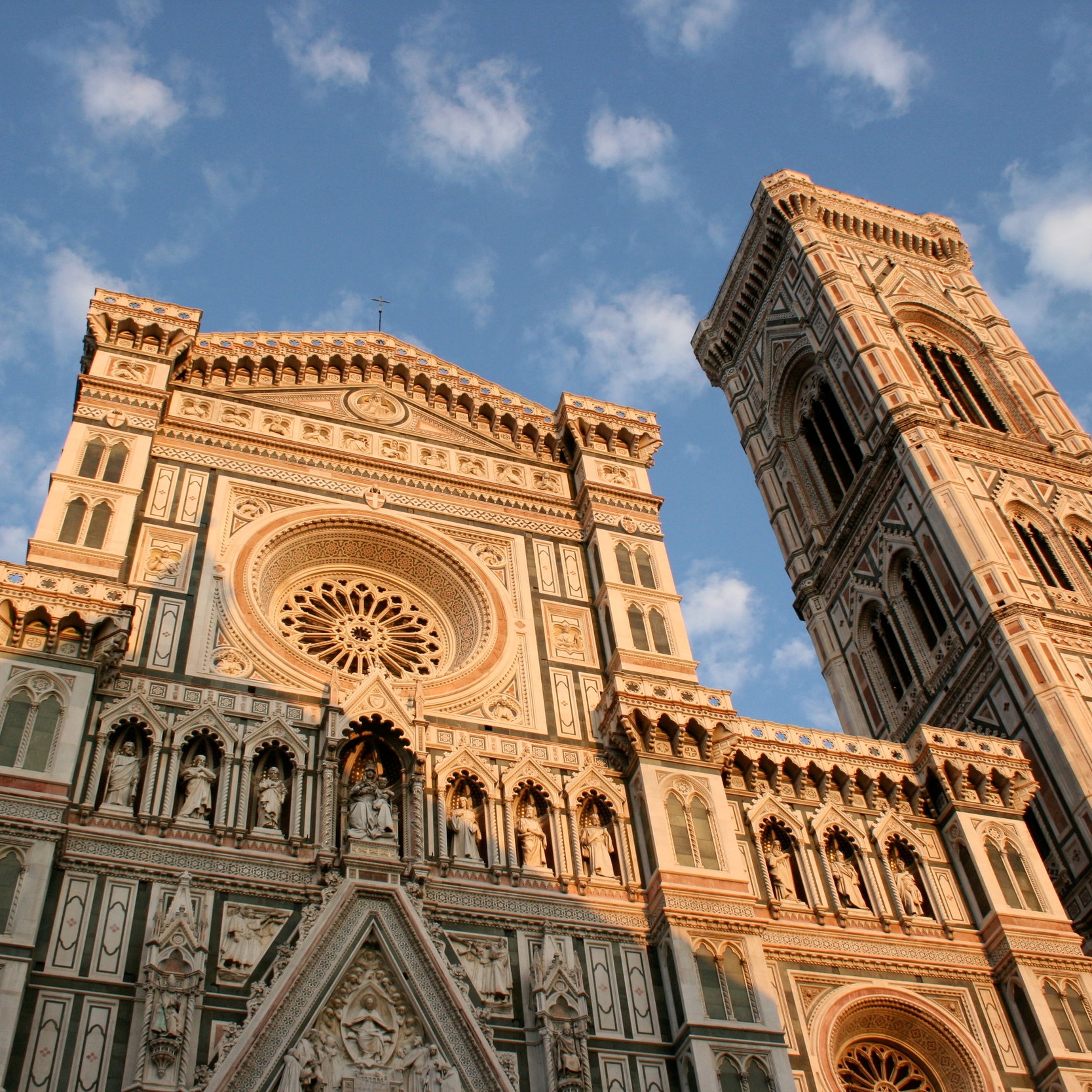
Santa Maria dell Fiore in Florence — commonly known as the Duomo